
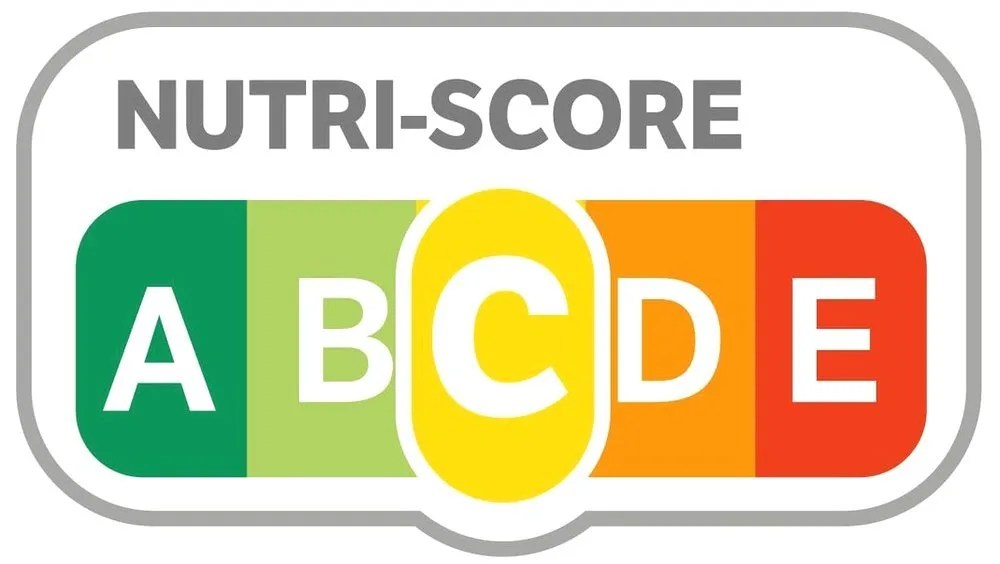
You may have already noticed the colour-coded label that appears on the packaging of some foods. This label is called Nutri-Score, and its main purpose is to indicate the quality of a food in a simple way. Foods are classified into 5 colour grades from A to E (from the highest quality to the lowest).
As mentioned, Nutri-Score is designed to help you assess food quality at a glance. As a customer, you can tell the quality of a product at first sight and choose accordingly.
How does it work and how is it calculated?
The Nutri-Score result is influenced by 2 groups – "unfavourable" components (sugars, saturated fatty acids, sodium content…) and "favourable" components (fruit, vegetables, fibre…)
Put very simply, each food is assigned points based on how much "bad" and "good" stuff it contains. If a food has a lot of energy, sugar, fat, or sodium per 100 g, it gets more "bad" points. Likewise, if it has plenty of "good" components, it gets more "good" points.
The maximum number of "bad" points a food can receive is 40, and the maximum number of "good" points is 15. The final value is then calculated as follows:
If a food has more than 12 "bad" points, we look at whether it contains a lot of fruit and vegetables:
- If it contains more than 80% fruit and vegetables, the Nutri-Score is the difference between the "bad" points and the "good" points. (= "bad" points – "good" points)
- If it contains less than 80% fruit and vegetables, the Nutri-Score is the difference between the "bad" points and the points awarded for fibre, fruit, or vegetables. (= "bad" points – points for fibre, fruit, and vegetables)
If a food has fewer than 11 "bad" points, or if we're calculating the Nutri-Score for cheese, it is computed as the difference between the "bad" and "good" points. (= "bad" points – "good" points)
The lower the result, the higher the quality of the food.
The downsides?
Nutri-Score can sometimes be quite misleading. Take, for example, the category of foods high in energy and low in healthy nutrients (so-called junk food). Diet Coke (Nutri-Score B) and frozen fries (Nutri-Score A) are examples that many people would file under "unhealthy," yet they receive favourable Nutri-Score ratings.
For diet drinks, the Nutri-Score B reflects their low or zero energy and sugar content. Versions with regular sugar and energy content usually receive an E rating. Nutri-Score does not take sweeteners into account, nor the other additives found in diet versions of drinks, which can lead to their relatively good score. Keep in mind, however, that excessive consumption of sugar, sweeteners, and other additives has a negative effect on the human body.
In the case of frozen fries, Nutri-Score reflects the nutritional values of the food in the state in which it is sold, not after preparation and consumption. It does not consider the cooking method (frying or baking), the type of oil used, its amount, or any added salt. So the final dish may no longer deserve an A rating.
Sources